

Top 10 Fully Funded Scholarships in China for 2027
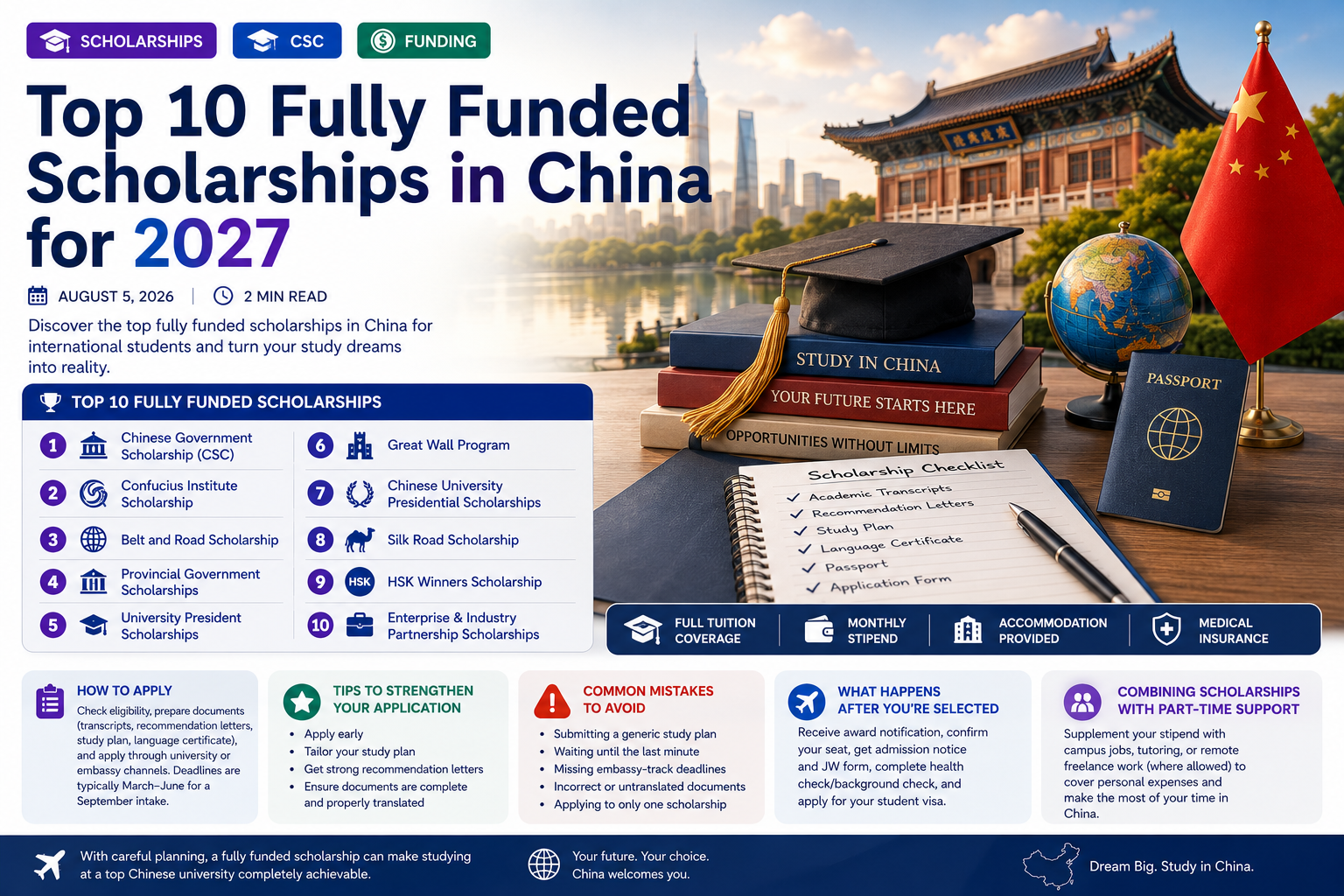
Funding is often the biggest factor in deciding where to study. Fortunately, China offers some of the most generous fully funded scholarship programs in the world for international students. Here are ten worth knowing about for the 2027 intake.
- Chinese Government Scholarship (CSC) — full tuition, stipend, and accommodation at top national universities.
- Confucius Institute Scholarship — for students focusing on Chinese language and culture.
- Belt and Road Scholarship — for students from Belt and Road partner countries.
- Provincial Government Scholarships — offered by regional governments such as Jiangsu, Zhejiang, and Shandong.
- University President Scholarships — funded directly by individual universities for outstanding applicants.
- Great Wall Program — a CSC track for developing-country candidates in specific fields.
- Chinese University Presidential Scholarships — merit-based awards covering tuition and living costs.
- Silk Road Scholarship — for students in regions along the historic Silk Road trade routes.
- HSK Winners Scholarship — awarded to top performers in the HSK Chinese proficiency exam.
- Enterprise and Industry Partnership Scholarships — funded by companies partnering with specific technical universities.
How to Apply
Each scholarship has its own eligibility criteria and deadlines, but most require a valid passport, academic transcripts, letters of recommendation, a study or research plan, and sometimes a language proficiency certificate. Applications typically open in the winter and close between March and June for a September intake.
Tips to Strengthen Your Application
- Apply as early as possible; many scholarships are awarded on a rolling basis.
- Tailor your study plan to the specific university and program.
- Request recommendation letters from professors who know your academic work well.
- Double-check that all documents are translated and notarized if required.
With careful planning, a fully funded scholarship can make studying at a top Chinese university completely achievable, regardless of your financial background.
Common Mistakes to Avoid
- Submitting a generic study plan that isn't tailored to the specific scholarship or university.
- Waiting until the deadline week to request recommendation letters.
- Missing embassy-track deadlines, which are often earlier than university-track deadlines.
- Failing to have documents properly translated or notarized as required.
- Applying to only one scholarship instead of multiple tracks to improve your odds.
What Happens After You're Selected
Once notified of a scholarship award, you'll typically receive an official notification letter along with instructions for confirming your seat, followed by an admission notice and the JW202 or JW201 form needed for your student visa. Some scholarships require a health examination and background check before final confirmation, so keep an eye on communication from both the scholarship council and your university's international office.
Combining Scholarships with Part-Time Support
Even with a full scholarship covering tuition and a monthly stipend, many students choose to supplement their income through part-time tutoring, campus assistant roles, or remote freelance work where visa regulations allow it. This can help offset costs like travel home during holidays or unexpected expenses that aren't covered by the scholarship stipend.