

Study in China: The Comprehensive Guide for International Students
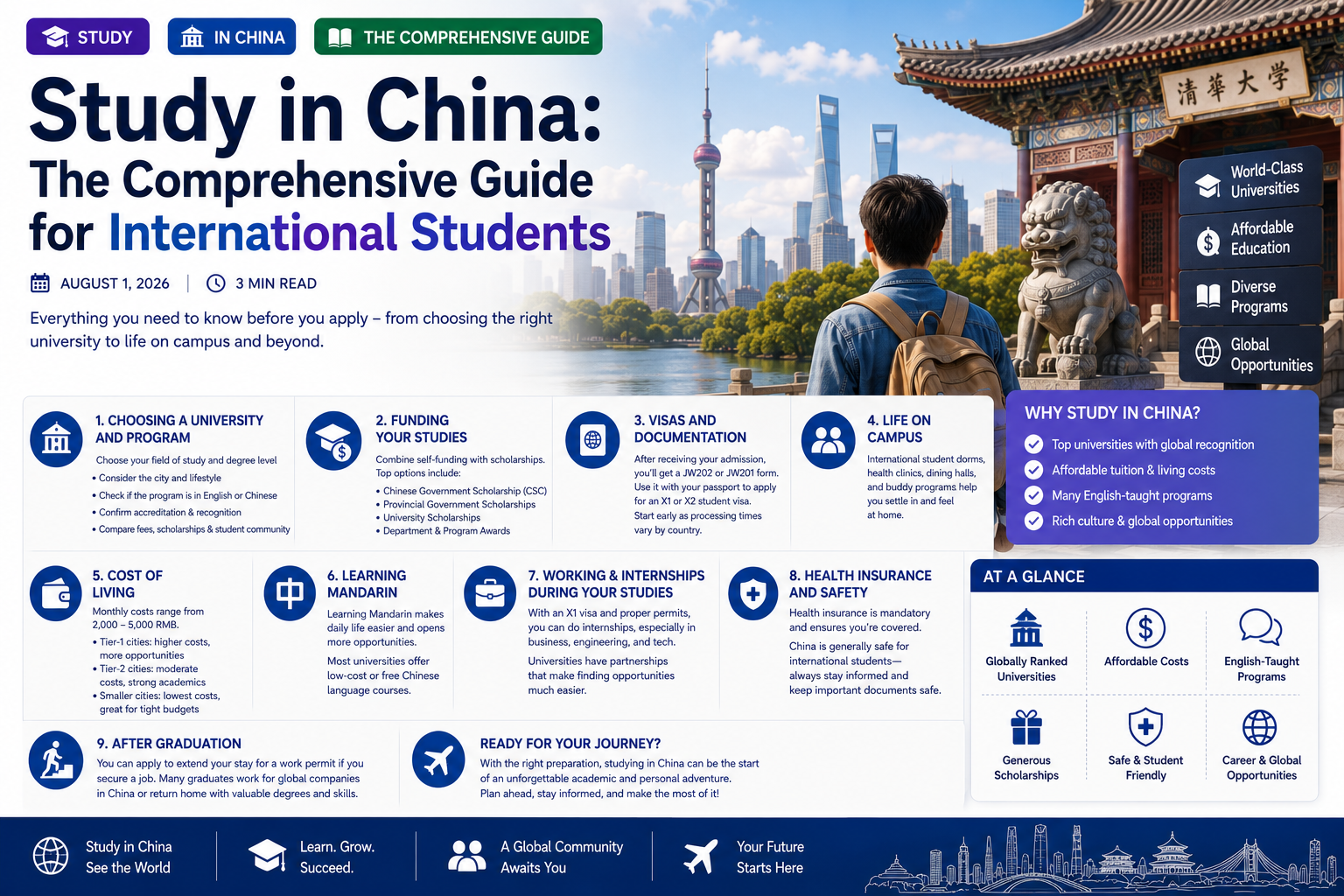
China has become one of the most popular study destinations in the world, hosting hundreds of thousands of international students every year. With globally ranked universities, affordable tuition compared to Western countries, and a wide range of English-taught programs, it's easy to see why. This guide walks you through everything you need to know before you apply.
Why Study in China
Chinese universities have climbed rapidly in global rankings over the past decade, with institutions like Tsinghua University, Peking University, and Fudan University now regularly appearing among the world's top 100. Tuition and living costs remain far lower than in the US, UK, or Australia, and many programs are taught entirely in English, so a Chinese language requirement isn't always necessary.
Choosing a University and Program
Start by deciding on your field of study and degree level, then narrow down universities that offer strong programs in that area. Consider the city as well: Beijing and Shanghai offer the most resources and largest international communities, while cities like Hangzhou, Nanjing, and Wuhan offer a lower cost of living with excellent academics.
- Check whether the program is taught in English or Chinese.
- Confirm the university's accreditation and international recognition.
- Compare tuition fees and available scholarships.
- Look at the size of the existing international student community.
Funding Your Studies
Most international students in China combine self-funding with scholarships. The Chinese Government Scholarship (CSC) is the most prestigious option, covering full tuition, accommodation, and a monthly stipend. Provincial governments and individual universities also offer their own scholarships, which are often easier to qualify for.
Visas and Documentation
Once you receive an admission offer, the university will issue a JW202 or JW201 form, which you'll need along with your passport to apply for an X1 or X2 student visa at your nearest Chinese embassy or consulate. Start this process early, as processing times vary by country.
Life on Campus
Most Chinese universities provide dedicated international student dormitories, campus health clinics, and dining halls with both Chinese and international food options. Many universities also run buddy programs pairing new international students with local students to help with the transition.
Cost of Living
Monthly living costs for international students in China typically range from 2,000 to 5,000 RMB depending on the city, covering meals, transportation, and personal expenses. Dormitory accommodation is usually the most affordable option, while off-campus apartments cost more but offer greater independence and privacy.
- Tier-one cities (Beijing, Shanghai): higher rent and dining costs, but more part-time and internship opportunities.
- Tier-two cities (Hangzhou, Nanjing, Wuhan): moderate costs with strong academic options.
- Smaller cities and provincial capitals: the lowest cost of living, ideal for students on a tight budget.
Learning Mandarin
Even in English-taught programs, picking up basic Mandarin makes daily life significantly easier, from ordering food to navigating public transport. Most universities offer free or low-cost Chinese language electives, and many international students reach conversational fluency within their first year simply through immersion.
Working and Internships During Your Studies
International students on a valid X1 student visa can generally take on internships with permission from their university and local authorities, particularly in fields like business, engineering, and technology. Many universities also have partnerships with local and multinational companies that make it easier to find relevant internship placements.
Health Insurance and Safety
Comprehensive medical insurance is mandatory for all international students in China and is either provided through scholarship programs or purchased separately for self-funded students. China is generally considered a safe country for international students, with low rates of violent crime, though it's still wise to register with your embassy and keep copies of important documents.
After Graduation
Graduates of Chinese universities can apply to extend their visa for a work permit if they secure employment, and many go on to work for multinational companies with a presence in China or return home with a valuable international qualification and language skills that set them apart in the job market.
Studying in China is a significant step, but with the right preparation, it can open doors to a world-class education and a truly international experience.